Patent pending · Now in private beta

AI Caretaker

It listens, so you can step away.

A voice-activated safety system for people living with dementia. It talks with them, notices emergencies, and keeps the family informed. Nobody has to press a button or remember a command.

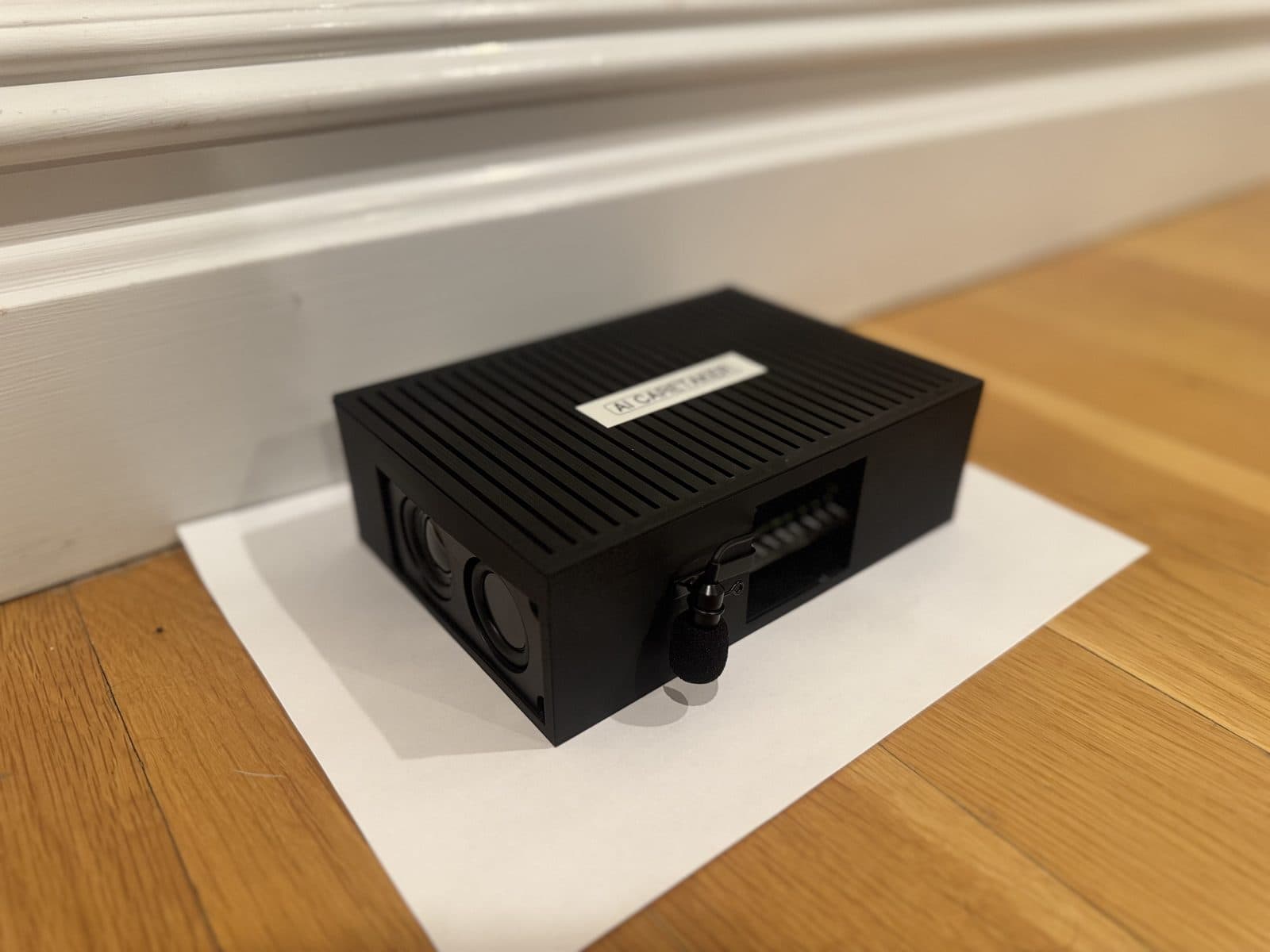
The AI Caretaker device on a table

Why I built it

It started with a Ring notification.

A blue Ring notification would flash across my phone in the middle of class, and my stomach would drop. My grandfather's dementia led him to wander outside alone. Once, a neighbor found him walking around the block and brought him home. I learned to recognize the click of our front door lock from my bedroom and race downstairs before he got too far.

Life Alert needed him to recognize an emergency. A GPS watch couldn't help inside the house. “Hey Alexa” was a phrase he could never remember. What I needed didn't exist, so I spent three years building it.

The first time I set the device beside him, he asked it, “Did I go for my walk today?” It checked his activity log and said, “Yes, you went for a walk this afternoon.” He nodded and settled back into his chair. Something was finally listening to him.

Aryan Dhingra, founder. More about me ›
Built around one idea.

Instead of asking people to adapt to technology, build technology that adapts to them.

Just talk.

No wake word, no buttons, no app. Those are exactly what make Alexa or Life Alert unusable for someone with dementia. They speak, and AI Caretaker answers in a calm, simple voice.

Just talk.

Family, in the loop.

A caregiver dashboard shows conversations, flagged emergencies, and activity and medication logs, so family can check in from anywhere.

Family, in the loop.

Emergencies, caught.

Every sentence is checked for signs of danger, like a fall, chest tightness, or nighttime confusion. If something's wrong, the family gets a text with a 0–100 severity score and what was said.

Meals and meds, logged.

When someone mentions a meal, a walk, or a pill in normal conversation, it gets logged automatically. They don't have to remember to report anything.

From a sentence to a text message.

Four steps take a spoken word in the living room to a caregiver's phone in about three seconds.

1

Listen

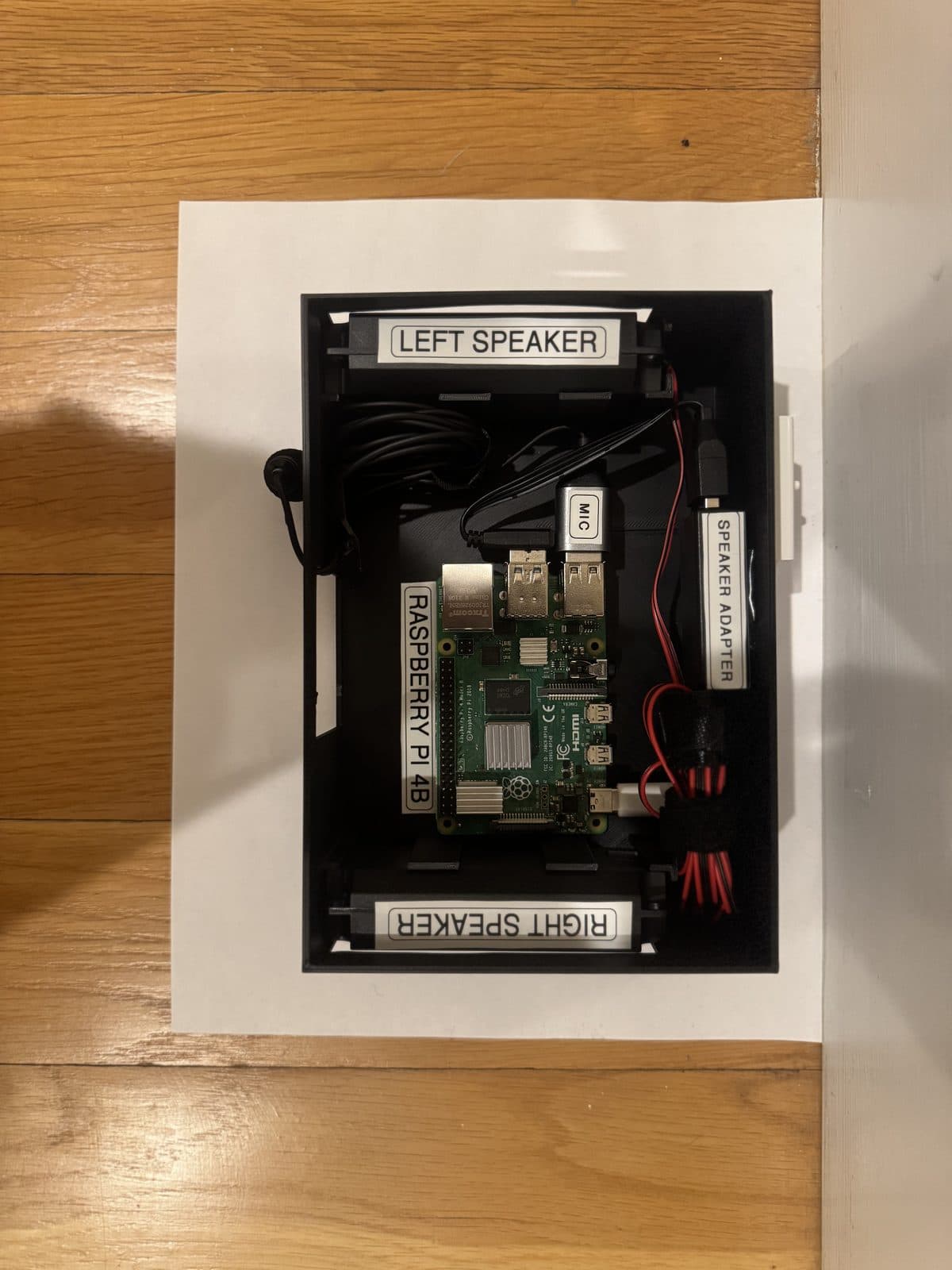
A Raspberry Pi 4B tabletop device picks up speech and transcribes it. Recognition is tuned for the slow, hesitant speech common with dementia.

2

Understand

The backend pulls the last five minutes of conversation for context, then asks GPT-4o mini for a spoken reply plus structured emergency, activity, and medication data.

3

Record

Every statement, reply, and detection is saved to a Supabase PostgreSQL database. That powers both the context window and the long-term history.

4

Notify

An emergency sends an SMS to the caregiver right away. Everything else appears on the live dashboard.

Raspberry Pi 4B · Python · GPT-4o mini · Supabase PostgreSQL · TypeScript dashboard · SMS alerts

Under the hood.

The design choices that make conversation a reliable safety signal.

Structured output on every turn.

The model returns strict JSON every time: the reply the patient hears, plus separate emergency, activity, and medication objects. Conversation stays separate from the data that drives alerts and the dashboard.

Memory that understands escalation.

A rolling five-minute context window means “I feel strange,” then “I feel dizzy,” then “I can't stand” is read as one escalating emergency, while “that movie almost killed me” is correctly ignored.

Faster in parallel.

A student I was teaching in India asked why two independent steps ran one after the other. Running them at the same time cut 1.21 seconds from every response.

Peer-reviewed in Cureus · August 2026

Tested, measured, and published.

I tested the full system on 12 scripted scenarios, from clear emergencies to safe controls to tricky edge cases, each run 10 times. The results, including where it fell short, are in the paper.

94.6%
speech-to-text accuracy
76.7%
emergency classification accuracy
3.24s
average end-to-end response
120
scripted trials, 440 turns
Read the paperU.S. Provisional Patent Application No. 64/073,388 · Filed May 2026

Field pilot

15 families. Two weeks. Real homes.

I put AI Caretaker in the homes of 15 Bergen County families caring for a relative with dementia. They found problems my lab tests never did.

Accents

Transcription was less accurate for some accents. The next version needs speech models trained on more diverse voices.

Wi-Fi

Response times rose and fell with home Wi-Fi. This is the main reason to move the AI onto the device itself.

Silence

Many patients went long stretches without speaking first. AI Caretaker needs to start conversations, not only respond.

I've also spoken with physicians, nursing-home IT leads, and two hospital departments, who asked to revisit the project as it matures.

What's next.

Everything on this list comes straight from pilot feedback.

On-device AI

A specialized model running on the device itself: lower latency, no Wi-Fi dependence, and less data leaving the home.

Proactive check-ins

Gentle conversation starters through the day, so quiet patients are still engaged and still monitored.

A wearable

A watch form factor with heart rate and blood oxygen sensors, so protection follows the person instead of staying on the table.

The build.

Raspberry Pi internals of the device
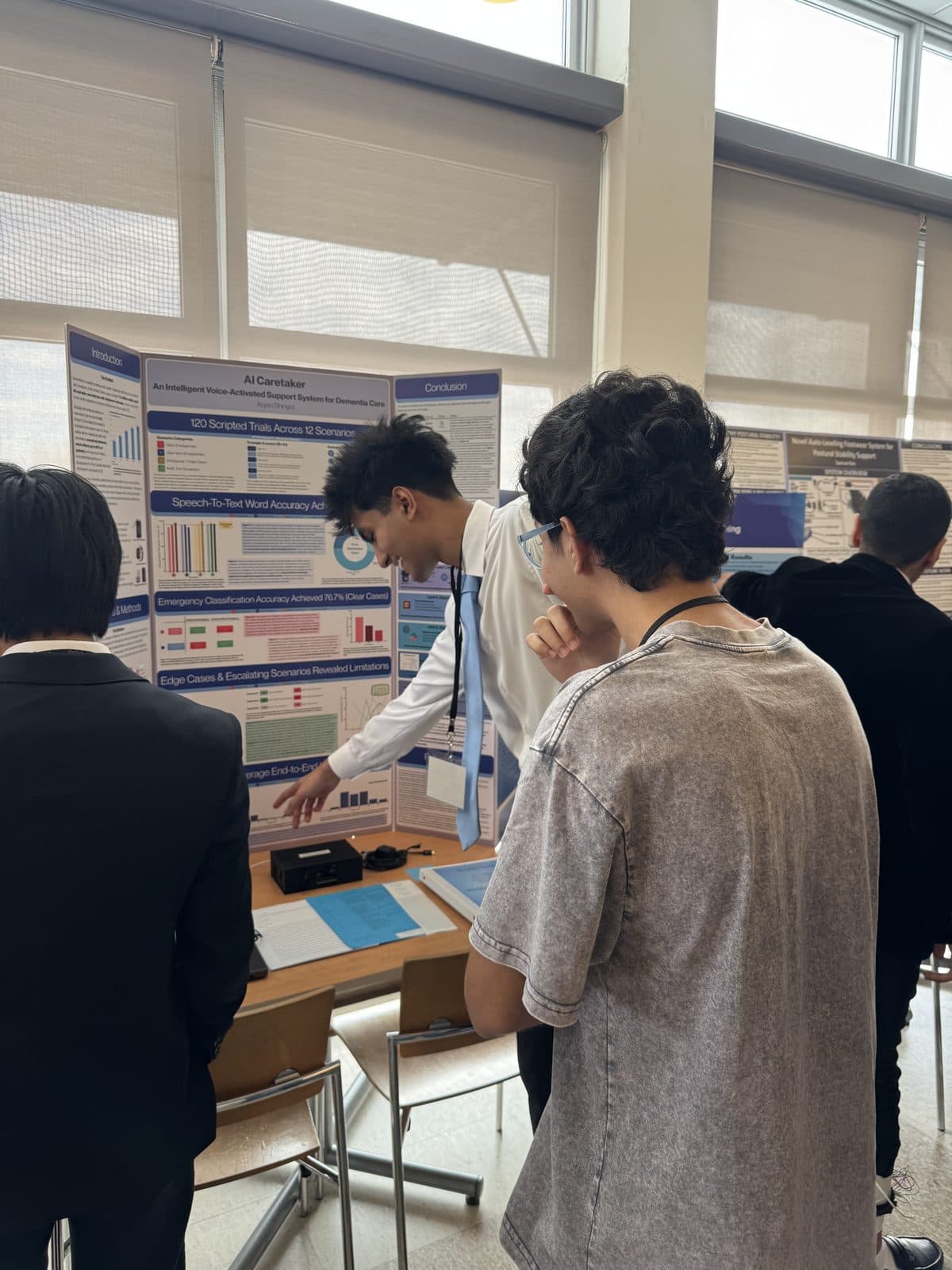
Demonstrating AI Caretaker to a visitor
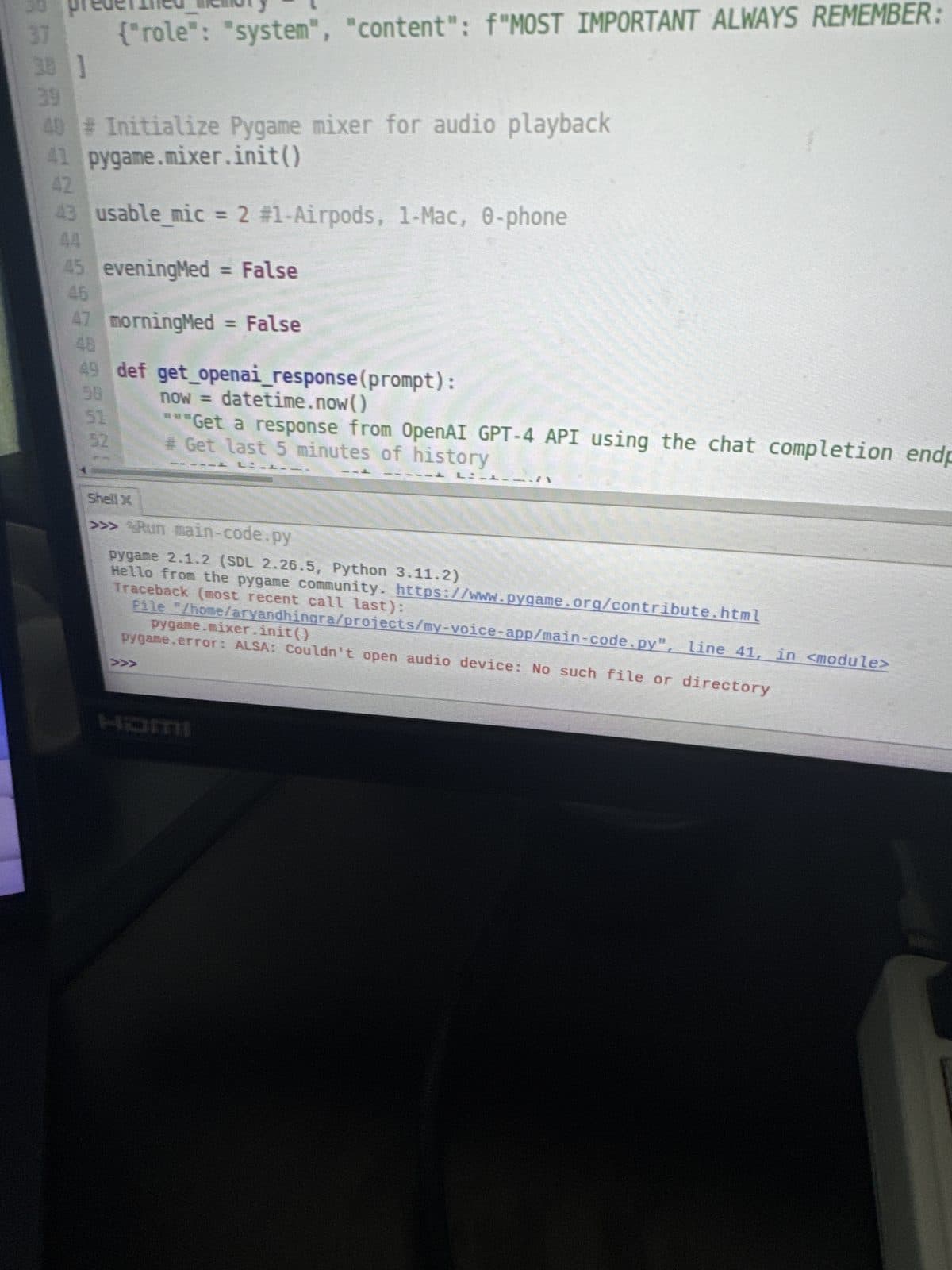
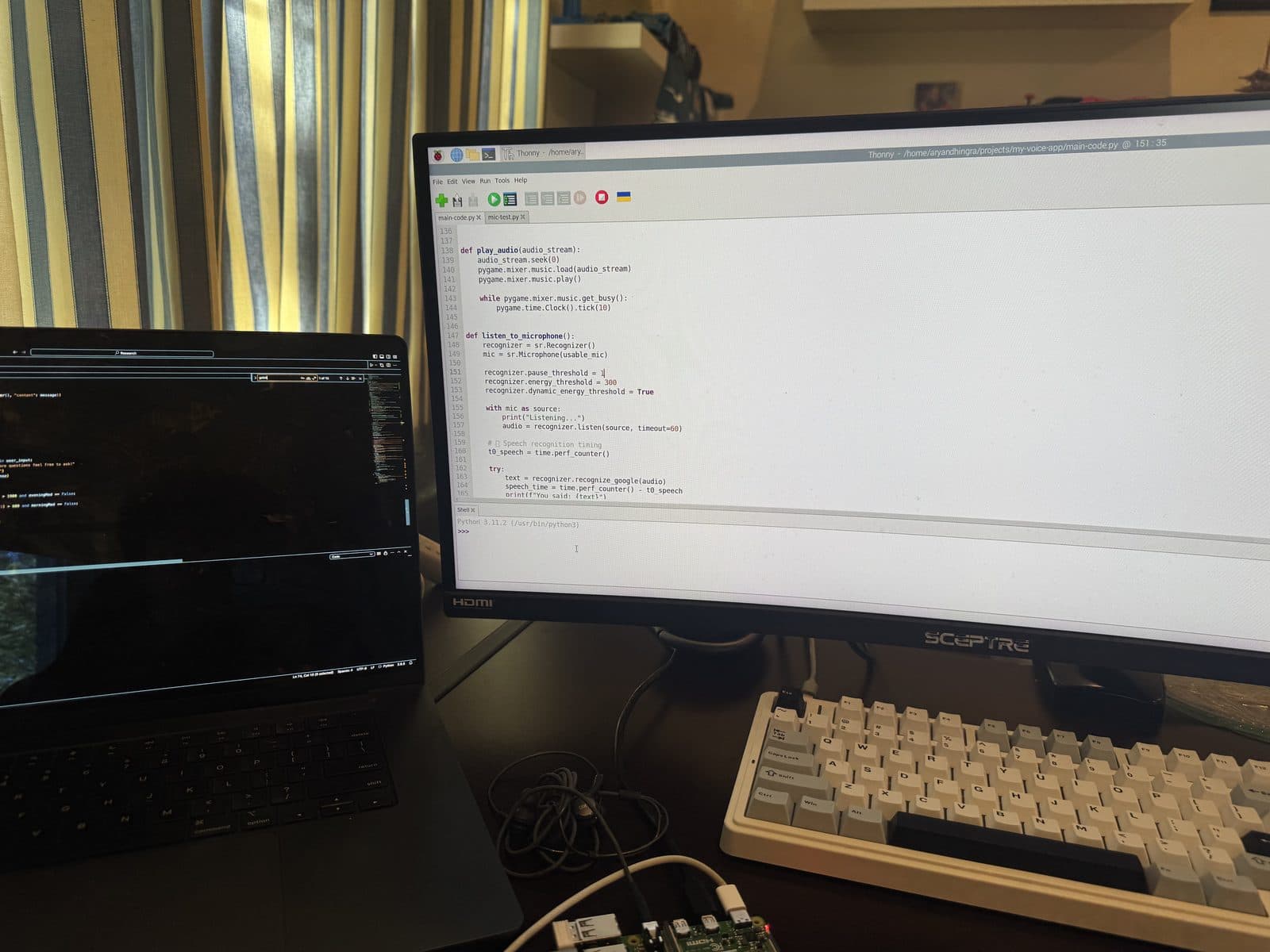
The AI Caretaker source code
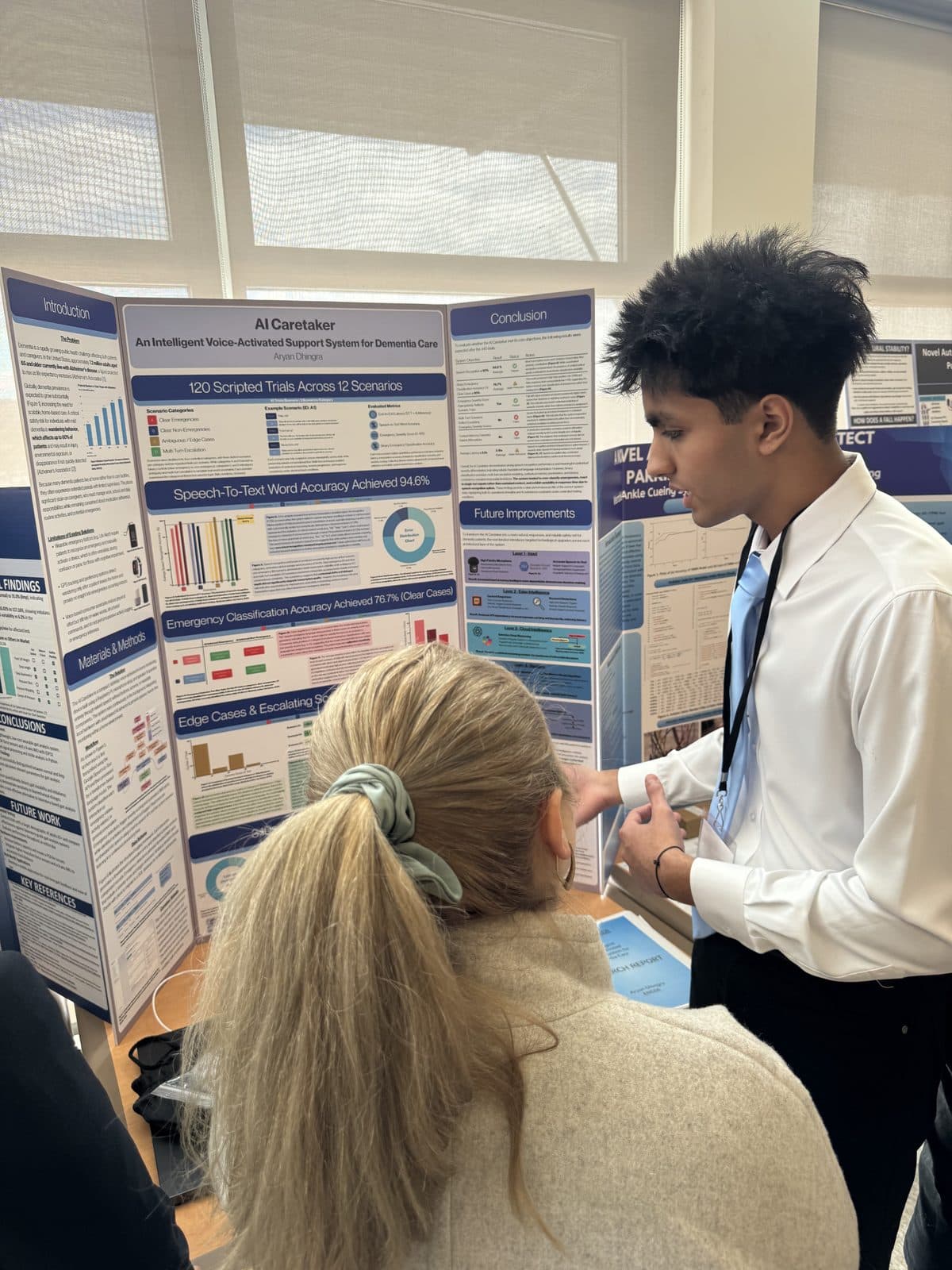
Explaining the research poster

Private beta

Be one of the first.

I'm bringing on a small group of caregivers, families, and clinicians to help shape AI Caretaker before launch. Sign up and I'll reach out personally.

  • Early hands-on access
  • A direct line to me
  • A real say in what gets built next

No spam. I'll only email you about the beta. See the Privacy Policy.

Questions.

Is AI Caretaker a medical device?+

No. It's a research prototype in private beta. It hasn't been reviewed by the FDA and doesn't diagnose or treat anything. It's meant to support caregivers, not replace supervision, professional care, or 911.

Is it always listening?+

During the beta, the device listens for speech in the room it's placed in so the person never has to press a button or say a wake word. Speech is transcribed and analyzed to generate replies and detect emergencies. Unplugging the device stops all listening.

Where does the data go?+

Transcripts, replies, and detections are stored in a secured database, and each family sees only their own data on the dashboard. Speech recognition and the language model are handled by third-party AI providers. Nothing is sold or used for advertising. The Privacy Policy has the full details.

How much will it cost?+

Pricing isn't final. I'm using feedback from the pilot families to set a price that keeps it affordable. If you'd like a say, the feedback form below asks.

Who builds it?+

I do. I'm Aryan Dhingra, a high school senior in New Jersey. I started AI Caretaker in 2023 for my grandfather, and I still design the hardware, write the software, and answer every email myself.

Feedback

Tell me everything.

Bugs, wishes, praise, confusion. Whether you've used the device or just have an idea, it comes straight to me and shapes the roadmap.

By submitting, you agree to the Privacy Policy.